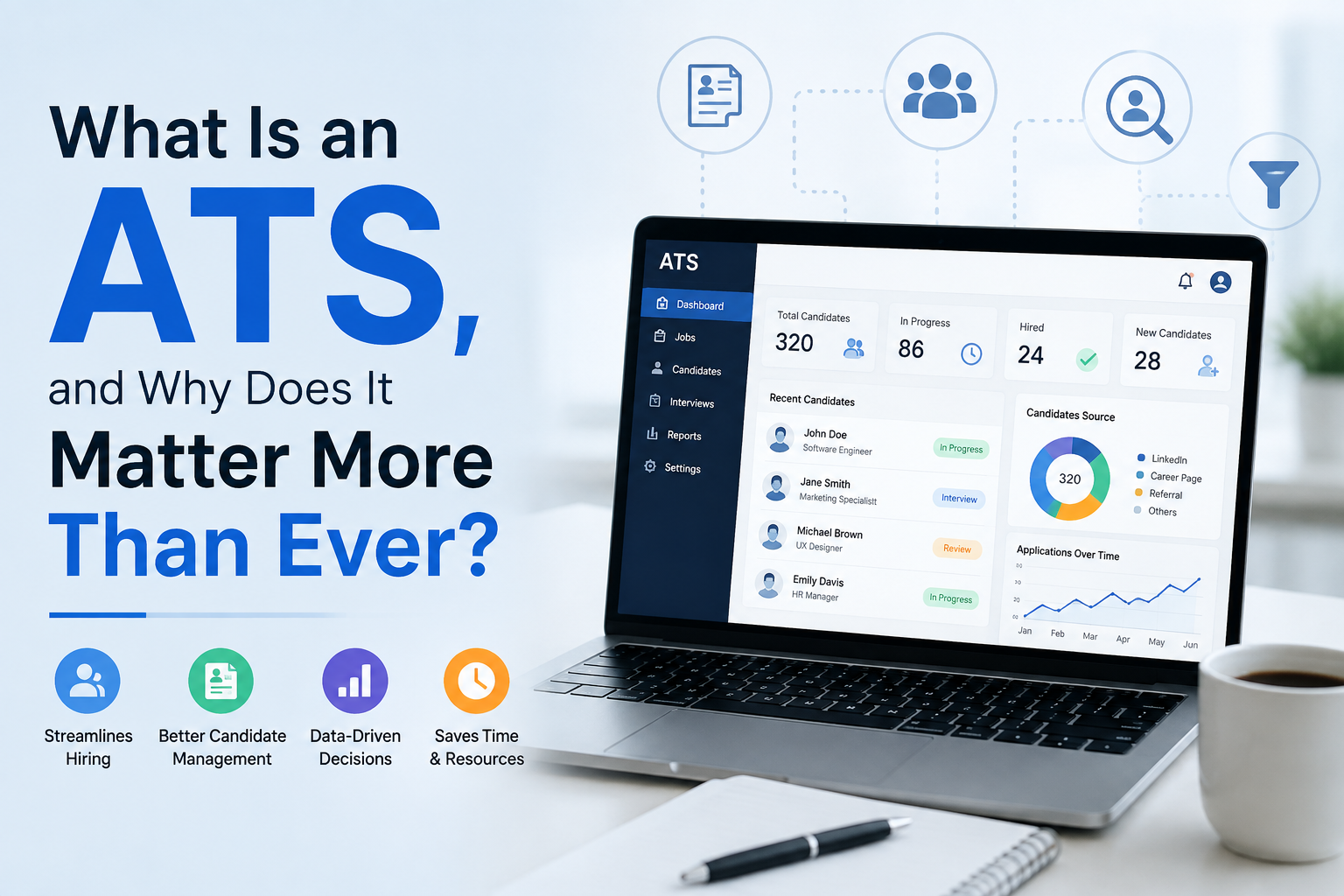
What Is an ATS, and Why Does It Matter More Than Ever?
An ATS scans, ranks, and sometimes auto-rejects resumes
based on keyword matches, formatting, and relevance to the job description.
With AI-driven recruitment tools becoming standard even for mid-sized
companies, this isn't just a "big MNC" problem anymore — it affects
every job seeker, from freshers applying for their first job to experienced
professionals switching industries.
5 Ways to Optimize Your Resume for AI Screening
1. Mirror the job description's language If the job
posting says "digital marketing executive," don't write
"marketing specialist." ATS software matches exact and near-exact
keywords, so pull relevant terms directly from the job listing and weave them
naturally into your resume.
2. Use a clean, simple format Skip fancy tables,
graphics, and multi-column layouts. Many ATS platforms still struggle to parse
them correctly, which can cause your experience or skills section to be misread
or skipped entirely. Stick to standard headings like "Work Experience,"
"Education," and "Skills."
3. Include both the acronym and the full term Write
"Search Engine Optimization (SEO)" instead of just one or the other.
This covers you whether the ATS is scanning for the abbreviation or the full
phrase.
4. Quantify your achievements AI ranking tools
increasingly weigh measurable outcomes. "Increased lead generation by 30%
in 6 months" ranks higher than "responsible for lead
generation."
5. Tailor your resume for every application A generic
resume sent to 50 jobs performs worse than a tailored resume sent to 10. Adjust
your skills and summary section to match each specific role you apply for.
Beyond the Resume: What Recruiters Actually Look For
Once you clear the ATS filter, a human recruiter reviews
your profile. At this stage, clarity matters more than keyword density. Keep
your career summary sharp, highlight relevant experience first, and make sure
your contact details and LinkedIn profile are up to date.
Trending in 2026: AI Interview Screening
It's not just resumes — many companies now use AI-assisted
video interviews for the first round. Practicing clear, structured answers
(using frameworks like STAR — Situation, Task, Action, Result) helps you
perform well whether you're speaking to a human or an algorithm.
Common ATS Mistakes That Get Resumes Rejected Instantly
Even qualified candidates lose out because of small,
avoidable errors. Watch out for these:
- Uploading
the wrong file type. Some ATS platforms still struggle with certain
formats. Unless the job posting says otherwise, a standard .docx or a
text-based PDF (not a scanned image) is the safest choice.
- Putting
key information in headers or footers. Many ATS parsers skip headers
and footers entirely, so if your contact details or job title only appear
there, they may never be read.
- Using
creative job titles. "Growth Ninja" or "Sales
Rockstar" might look fun, but ATS software — and recruiters doing a
quick scan — respond better to standard titles like "Sales
Executive" or "Digital Marketing Associate."
- Skipping
the skills section. A dedicated skills section makes it easy for both
AI and human reviewers to quickly match you to the role.
- Inconsistent
date formatting. Mixing "Jan 2023 – Present" with
"03/2022 to 05/2023" can confuse parsing software. Pick one
format and use it throughout.
Sample Resume Structure That Works Well With ATS
If you're rebuilding your resume from scratch, this simple
structure performs consistently well across most ATS platforms:
- Header
– Name, phone number, email, city, LinkedIn URL (in the body, not a
header/footer)
- Professional
Summary – 2–3 lines summarizing your experience and key skills, using
role-relevant keywords
- Skills
– A bulleted list of 8–12 relevant hard and soft skills
- Work
Experience – Reverse chronological order, with 3–5 bullet points per
role focused on achievements, not just duties
- Education
– Degree, institution, year of completion
- Certifications
(if any) – Especially useful for freshers to stand out
How Freshers Can Compete Without Much Work Experience
If you're just starting out, you can still build an
ATS-friendly resume that stands out:
- Lead
with a strong summary that highlights your degree, key skills, and career
goal.
- Include
internships, academic projects, and relevant coursework as substitutes for
full-time experience — describe them using the same achievement-focused
language you'd use for a job.
- List
any certifications, online courses, or workshops relevant to the role
you're targeting.
- Don't
leave the skills section thin — include software, tools, and technical
skills you've genuinely practiced, even in college projects.
What Happens After You Pass the ATS Screen
Clearing the ATS is just step one. Once a recruiter opens
your resume, they typically spend under 10 seconds on a first pass. To hold
their attention:
- Keep
your summary and most relevant experience visible without scrolling.
- Avoid
dense paragraphs — recruiters scan bullet points far more easily than
blocks of text.
- Make
sure your most recent and most relevant role is easy to find at the top of
your experience section.
A Quick Pre-Submit Checklist
Before you hit "apply," run through this list:
- Resume
tailored to this specific job description
- Keywords
from the posting included naturally
- Simple
formatting, no tables or graphics
- Contact
details in the main body, not header/footer
- Achievements
quantified wherever possible
- File
saved as .docx or text-based PDF
- Proofread
for spelling and grammar errors