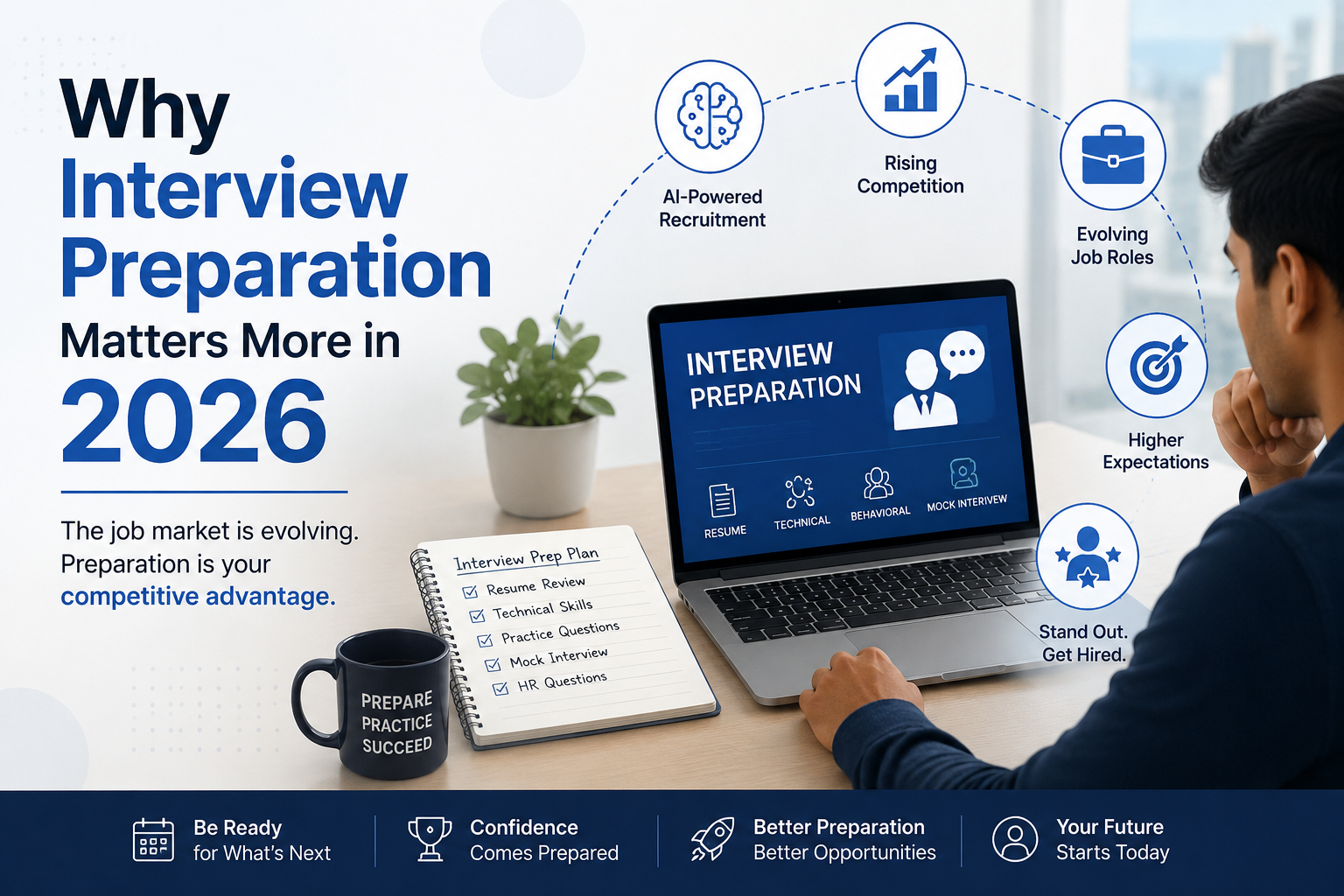
Why Interview Preparation Matters More in 2026
Companies are conducting shorter hiring cycles, which means less time to make an impression and less room for vague or rehearsed-sounding answers. Recruiters are also increasingly trained to spot candidates who've done real research versus those giving generic responses. Solid preparation isn't optional anymore — it's expected.
The Most Common Interview Questions (And How to Answer Them)
1. "Tell me about yourself." Keep this to 60–90 seconds. Structure it as: current role/education → key skills or achievements → why you're interested in this opportunity. Avoid reciting your entire resume.
2. "Why do you want to work here?" Generic answers like "for growth opportunities" fall flat. Mention something specific — the company's products, recent news, or the role's responsibilities — to show you've actually researched them.
3. "What are your strengths and weaknesses?" For weaknesses, pick something genuine but not disqualifying for the role, and show what you're doing to improve it. Avoid clichés like "I'm a perfectionist."
4. "Tell me about a challenge you faced and how you handled it." Use the STAR framework: Situation, Task, Action, Result. This keeps your answer structured and focused on outcomes, not just a story.
5. "Where do you see yourself in 5 years?" Employers want to see ambition that's realistic and aligned with the role — not a vague answer, and not something that suggests you'll leave in six months.
6. "Why should we hire you?" This is your chance to directly connect your skills to the job description. Reference 2–3 specific requirements from the posting and explain how you meet them.
For Freshers: How to Handle Interviews With Limited Experience
• Lean on academic projects, internships, and coursework as real examples — frame them using the same STAR structure as work experience.
• Be honest about your experience level, but pair it with enthusiasm and evidence you can learn quickly.
• Prepare 2–3 questions to ask the interviewer — this signals genuine interest, not just at showing up.
Common Interview Mistakes That Cost Candidates the Offer
• Being vague or rambling. Structured, concise answers consistently outperform long, unfocused ones.
• Speaking negatively about a previous employer. Even if it's true, it raises red flags about professionalism.
• Not researching the company or role. This is one of the fastest ways to lose credibility with a recruiter.
• Arriving late or joining video calls unprepared. For virtual interviews, test your camera, mic, and internet connection at least 15 minutes beforehand.
• Not asking any questions at the end. When asked "Do you have any questions for us?", always have at least one ready.
Preparing for Virtual and AI-Assisted Interview Rounds
Many companies now use recorded video interviews or AI-assisted screening for the first round. To perform well:
• Treat it exactly like a live interview — same energy, same eye contact with the camera, same structured answers.
• Keep your background simple and well-lit, and minimize background noise.
• Practice answering common questions out loud beforehand, not just in your head — this improves pacing and confidence.
A Simple Pre-Interview Checklist
• Researched the company's products, recent news, and mission
• Reviewed the job description and matched it to your own skills
• Prepared answers using the STAR framework for behavioral questions
• Prepared 2–3 thoughtful questions to ask the interviewer
• Tested your camera, mic, and internet (for virtual interviews)
• Planned your outfit and route/login details in advance
Turn Preparation Into Offers
Once you've nailed your interview prep, the next step is making sure you're applying to the right opportunities. On Jobhunterr.com, you can explore verified openings across IT, sales, marketing, accounting, customer support, and more — with new roles added regularly across Bangalore and other cities in India.
Browse live jobs on Jobhunterr.com and put your interview prep to work today.