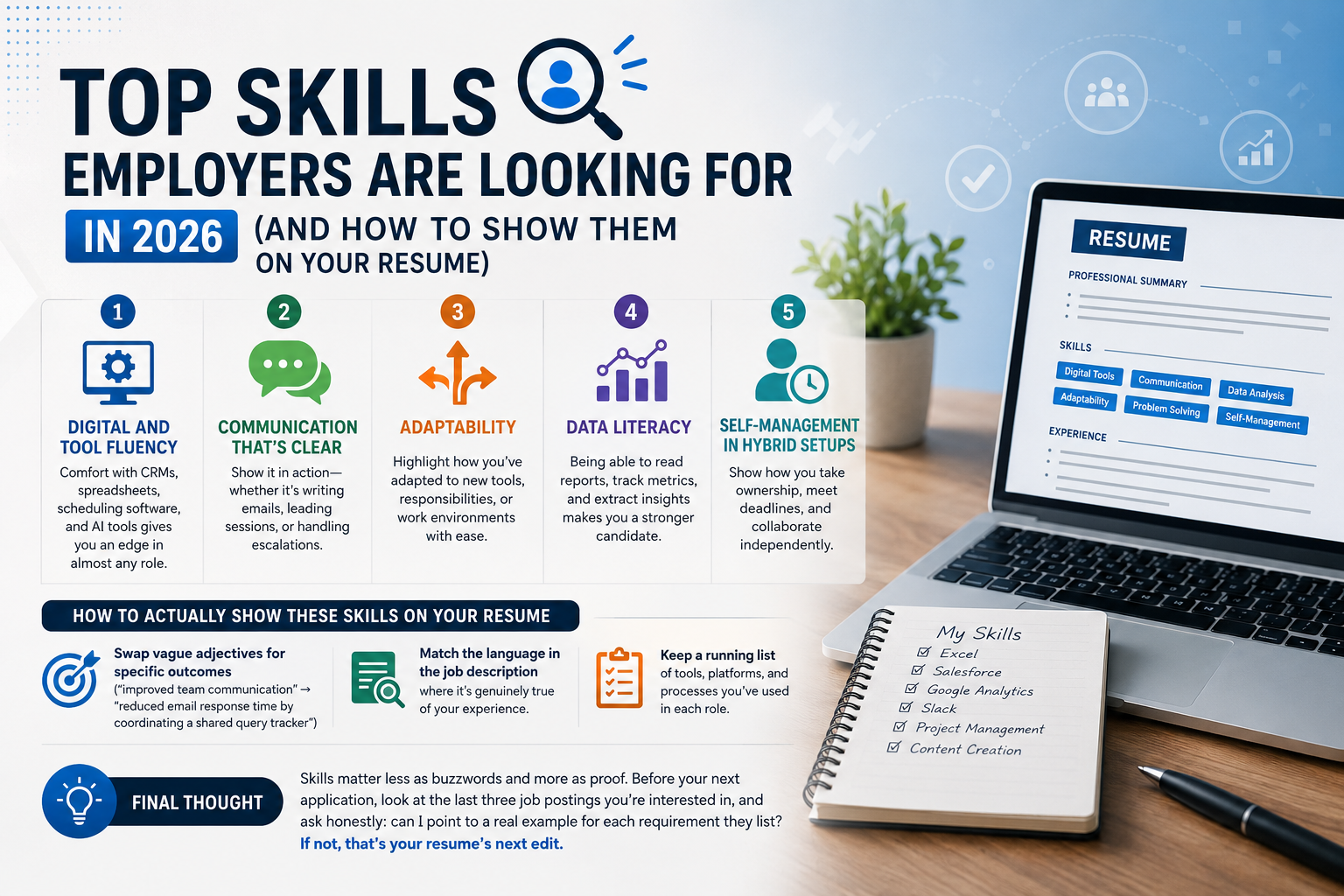
Top Skills Employers Are Looking For in 2026 (And How to Show Them on Your Resume)
The job market keeps shifting, and so does the checklist
recruiters run through before they even open a resume. If you're applying for
roles in IT, sales, marketing, accounting, or any of the industries hiring on
Jobhunterr, knowing which skills actually move the needle can be the difference
between an interview call and a silent rejection.
1. Digital and Tool Fluency
You don't need to be a software engineer to be expected to
know your tools. Recruiters across sales, admin, HR, and marketing roles now
expect comfort with CRMs, spreadsheets, scheduling software, and basic AI tools
like chatbots or content assistants. If you've used any of these in your last
job — even informally — name them on your resume instead of leaving them
implied.
2. Communication That's Clear, Not Just "Good"
Every job posting says "good communication
skills," which makes the phrase almost meaningless on its own. What
actually stands out is evidence: a bullet point about writing client emails,
running a training session, or handling escalations shows communication in
action rather than just claiming it.
3. Adaptability
Hiring managers are hiring for roles that will change in six
months, not just the job description in front of them. If you've switched
tools, taken on tasks outside your job title, or adjusted to a new manager's
working style, that's adaptability — and it's worth a line on your resume.
4. Data Literacy (Even Outside Data Roles)
You don't need to be a data analyst to benefit from data
skills. Sales reps who can read a pipeline report, marketers who understand
campaign metrics, and even HR professionals who track hiring funnels are more
attractive candidates than those who can't speak to numbers at all.
5. Self-Management in Hybrid and Remote Setups
With more work-from-home and hybrid roles on the market,
employers are screening for people who don't need constant supervision.
Mentioning how you managed deadlines independently, or worked across time
zones, signals this without you having to say "self-motivated"
outright.
How to Actually Show These Skills on Your Resume
- Swap
vague adjectives for specific outcomes ("improved team
communication" → "reduced email response time by coordinating a
shared query tracker")
- Match
the language in the job description where it's genuinely true of your
experience — recruiters and ATS systems both scan for this
- Keep
a running list of tools, platforms, and processes you've used in each
role, even if they seemed minor at the time
Final Thought
Skills matter less as buzzwords and more as proof. Before
your next application, look at the last three job postings you're interested
in, and ask honestly: can I point to a real example for each requirement they
list? If not, that's your resume's next edit.