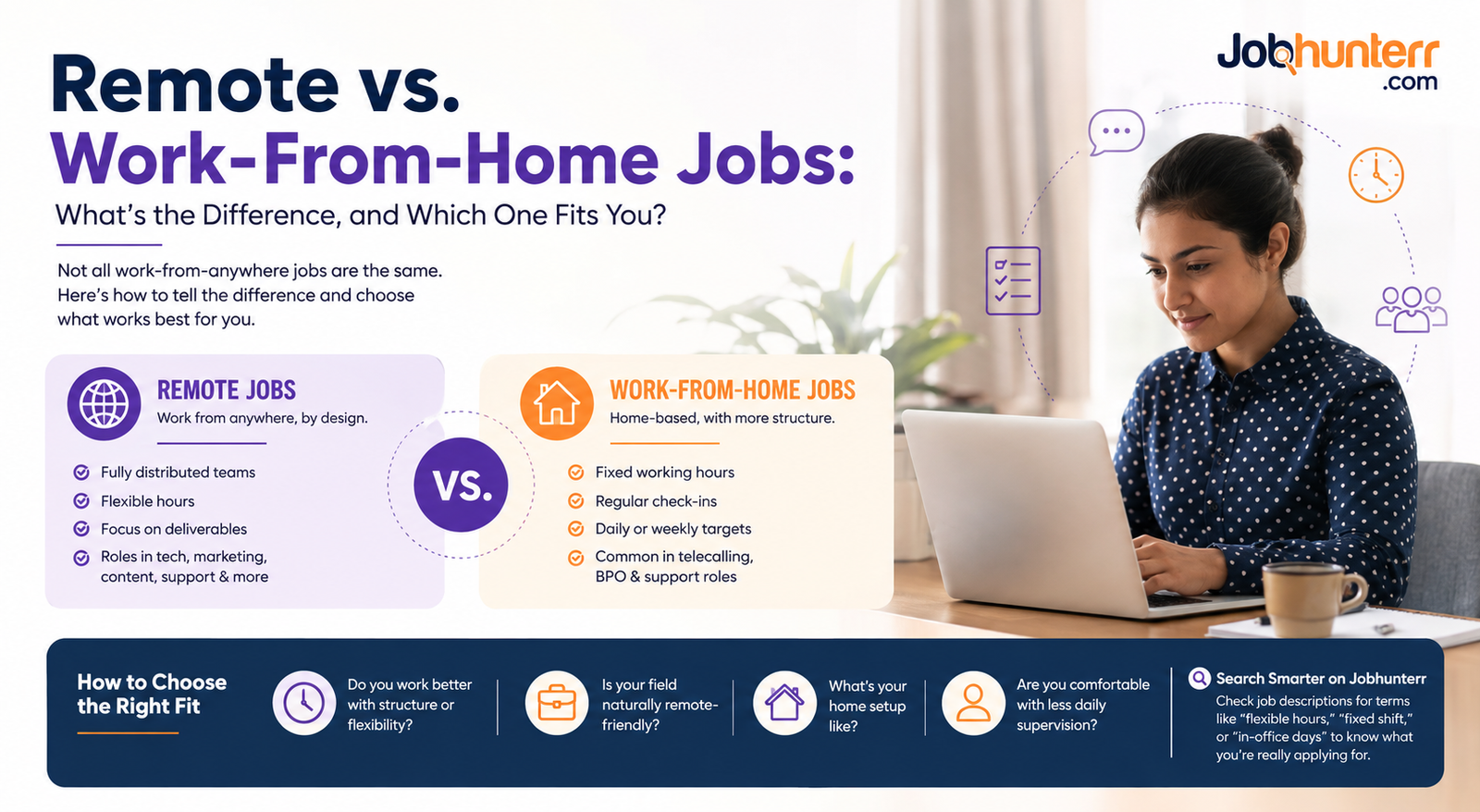
Remote vs. Work-From-Home Jobs: What's the Difference, and Which One Fits You?
Scroll through any job board and you'll see
"remote," "work from home," and "hybrid" used
almost interchangeably. But for job seekers, especially freshers and those
switching careers, mixing these up can lead to applying for the wrong kind of
role entirely. Here's a clear breakdown to help you search smarter on
Jobhunterr.
What "Remote" Actually Means
A remote job typically means the position was built to be
done from anywhere, with no fixed expectation of an office. These roles usually
come with:
- Fully
distributed teams, sometimes across cities or countries
- Communication
built around tools like video calls, chat apps, and shared documents
- Less
emphasis on working hours and more on deliverables
Remote roles are common in software development, digital
marketing, content, customer support, and data analysis — fields where the work
itself is naturally location-independent.
What "Work From Home" Usually Means
Work-from-home jobs, on the other hand, often started as
office-based roles that shifted location, or are structured with home as a base
but with tighter oversight. You'll typically see:
- Fixed
working hours, similar to an office shift
- Regular
check-ins or call monitoring, especially in telecalling and BPO roles
- Company-provided
targets tracked daily or weekly
This distinction matters because a work-from-home
telecalling role and a remote software developer role require very different
routines, even though both let you skip the commute.
Hybrid: The Middle Ground
Hybrid roles combine both — a few days in the office, the
rest from home. These are increasingly common in accounting, HR, and admin
roles where some in-person collaboration is still valued but full-time office
presence isn't necessary.
How to Choose the Right Fit for You
Ask yourself these questions before filtering your job
search:
- Do
you work better with structure or flexibility? If you need fixed hours
to stay productive, a work-from-home role with set shifts might suit you
better than a loosely structured remote one.
- Is
your field naturally remote-friendly? IT, design, and content roles
adapt easily to remote work; roles like sales or client servicing often
need at least occasional in-person contact.
- What's
your home setup like? A quiet, dedicated space matters more for remote
roles requiring calls or focused deep work.
- Are
you comfortable with less daily supervision? Remote roles often trust
you to manage your own time; work-from-home roles may still track activity
closely.
Searching Smarter on Jobhunterr
When browsing listings, don't rely on the title alone —
check the job description for terms like "flexible hours,"
"fixed shift," or "in-office days" to understand which
category a role really falls into.