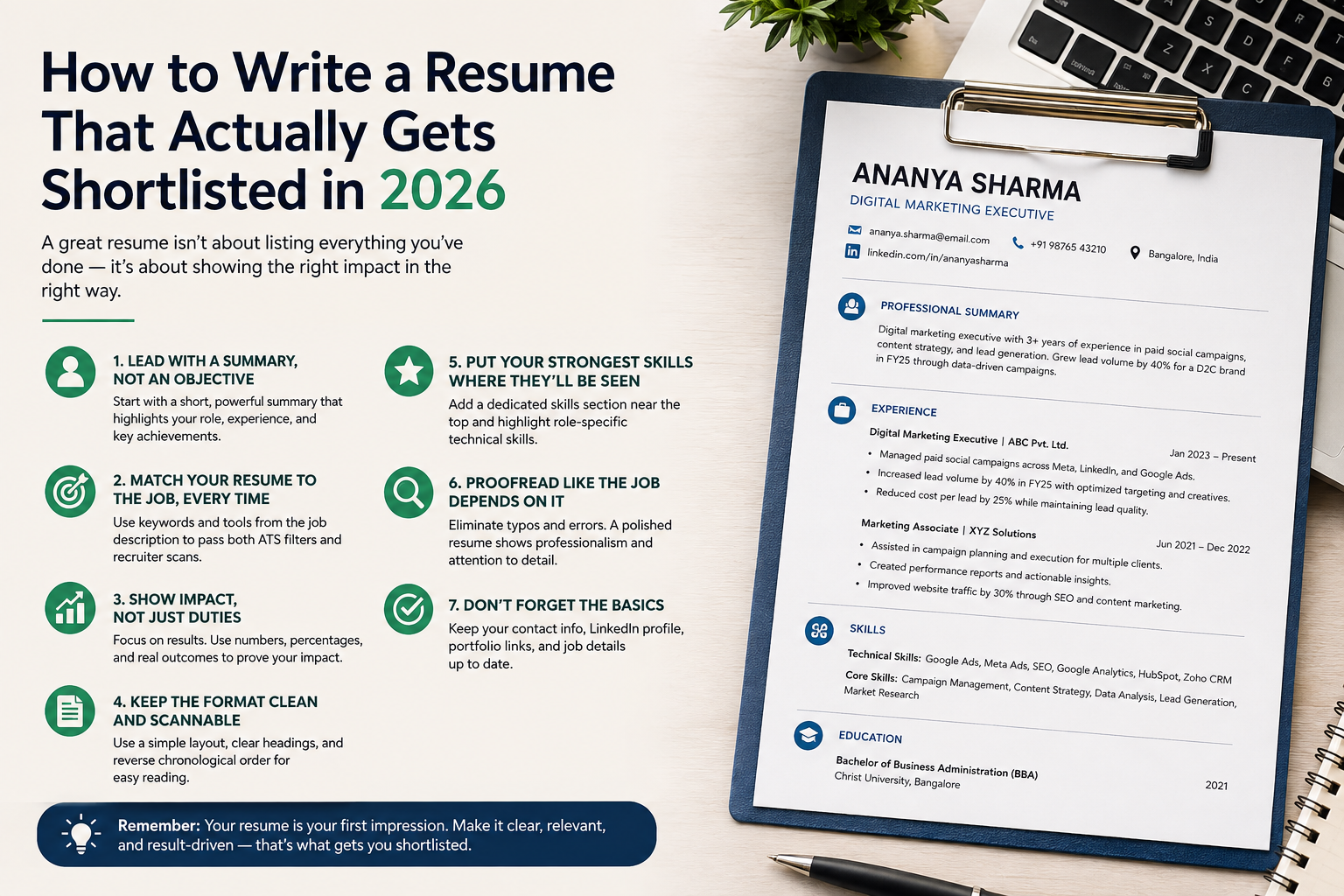
How to Write a Resume That Actually Gets Shortlisted in 2026
You could be the right person for the job and still never hear back — not because you lack the skills, but because your resume never made it past the first thirty-second scan. Recruiters today go through dozens of applications for a single opening, and most decisions on whether to move a candidate forward happen almost instantly. If your resume isn't built to survive that first glance, even a strong career story won't get read.
Here's how to build one that does.
1. Lead With a Summary, Not an Objective
Skip the old-school "Seeking a challenging role where I can utilize my skills" line. It says nothing about you. Instead, open with a two- or three-line summary that answers one question: why should this company care?
Mention your role, years of experience, and one or two measurable wins. For example: "Digital marketing executive with 3 years of experience running paid social campaigns; grew lead volume by 40% for a D2C brand in FY25."
2. Match Your Resume to the Job, Every Time
Sending the same resume to every opening is one of the most common reasons applications get ignored. Before you apply, read the job description carefully and pull out the exact skills and tools it mentions. If a listing asks for "experience with CRM tools" and you've used Zoho or Salesforce, say so explicitly — don't make the recruiter guess.
Many companies also use applicant tracking systems that scan for keywords before a human ever sees the resume. Mirroring the language of the job post (without copying it word-for-word) genuinely improves your odds of getting through that first filter.
3. Show Impact, Not Just Duties
There's a big difference between listing what you were responsible for and showing what you actually achieved. Compare these two lines:
• "Handled customer queries and resolved complaints."
• "Resolved 95% of customer complaints within 24 hours, improving CSAT score from 78% to 91%."
The second line tells a recruiter something concrete. Wherever possible, attach a number — percentage growth, amount saved, team size managed, time reduced. If you don't have exact figures, a reasonable estimate is still far better than a vague description.
4. Keep the Format Clean and Scannable
Recruiters skim before they read. A cluttered, overly designed resume with multiple fonts, colors, and columns often works against you, especially since it can confuse automated screening tools. Stick to:
• One or two pages (one page if you have under 5 years of experience)
• A simple, consistent font and clear section headings
• Reverse chronological order for work experience
• Standard section names like "Experience," "Education," and "Skills" rather than creative alternatives
5. Put Your Strongest Skills Where They'll Be Seen
Don't bury your most relevant skills at the bottom of the page. Create a dedicated skills section near the top, and separate technical or role-specific skills from general ones. If you're applying for an IT role, list programming languages, tools, and frameworks clearly rather than folding them into a paragraph.
6. Proofread Like the Job Depends On It — Because It Might
Typos, inconsistent formatting, and grammatical slips are small things that create a big impression. A resume with errors can suggest carelessness, even if that's not a fair reflection of your work. Read it aloud, use a spell-checker, and if possible, have someone else review it before you send it out.
7. Don't Forget the Basics
It sounds obvious, but many resumes still miss simple essentials:
• A professional email address (not a nickname from years ago)
• An updated phone number and location
• A link to your LinkedIn profile or portfolio, if relevant
• Correct, current job titles and dates