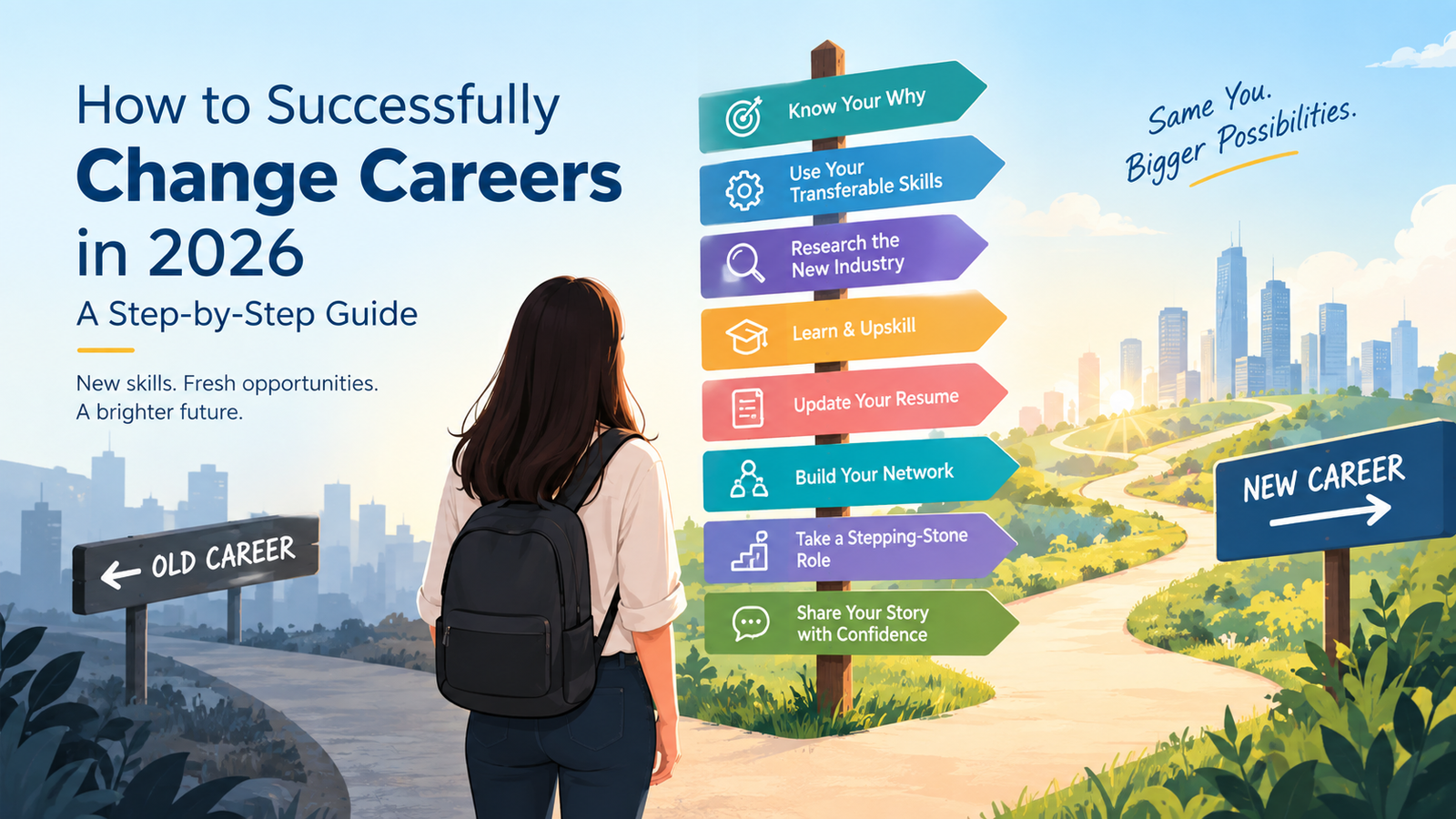
How to Successfully Change Careers in 2026: A Step-by-Step Guide
Switching careers can feel overwhelming — especially if
you've spent years building expertise in one field and are starting to question
whether it's still the right fit. The good news is that career transitions are
more common and more accepted than ever. Here's a practical roadmap to changing
industries without starting completely from scratch.
1. Get Clear on Why You Want to Switch
Before updating your resume, pin down the real reason behind
the change. Is it burnout, lack of growth, low pay, or genuine interest in a
new field? Understanding your "why" helps you target the right
opportunities instead of jumping from one unsatisfying role to another.
2. Identify Your Transferable Skills
Most skills are more transferable than people assume.
Project management, communication, data analysis, customer handling, and
leadership apply across industries. Make a list of your core skills and map
them against the requirements of your target field.
3. Research Your Target Industry Thoroughly
Read job descriptions in your desired field closely, follow
industry news, and connect with professionals already working there. This helps
you understand the terminology, expectations, and skill gaps you'll need to
close before applying.
4. Fill Skill Gaps with Targeted Learning
You don't need a full second degree to switch fields. Short
certification courses, online programs, or even volunteer projects can help you
build credibility in a new area while keeping your job search timeline
realistic.
5. Reframe Your Resume Around the New Role
Rather than listing your work history chronologically as-is,
rewrite your resume to highlight the experience most relevant to your target
role. Use a summary section at the top to clearly state your career transition
goal and the value you bring.
6. Network Your Way In
A large percentage of career-change hires happen through
referrals and networking rather than cold applications. Attend industry
meetups, reconnect with old colleagues who've made similar switches, and don't
hesitate to ask for informational interviews.
7. Consider a Stepping-Stone Role
If a direct jump feels out of reach, look for hybrid roles
that combine elements of your old field with your new target industry. This
lets you gain relevant experience while still leveraging your existing
background.
8. Prepare to Explain Your Transition Confidently
Interviewers will almost certainly ask why you're switching
fields. Prepare a short, positive narrative that focuses on what draws you to
the new industry rather than what you're running from in the old one.
Common Mistakes to Avoid
- Applying
to every role in the new field without tailoring your resume
- Undervaluing
your transferable skills
- Skipping
networking and relying only on job portals
- Sounding
negative about your current or past industry in interviews
- Expecting
an identical salary immediately during the transition
Final Thoughts
A career change is rarely instant, but with the right
preparation — clear goals, transferable skills, targeted learning, and a
confident narrative — it's absolutely achievable. Treat it as a deliberate
strategy, not a leap of faith.