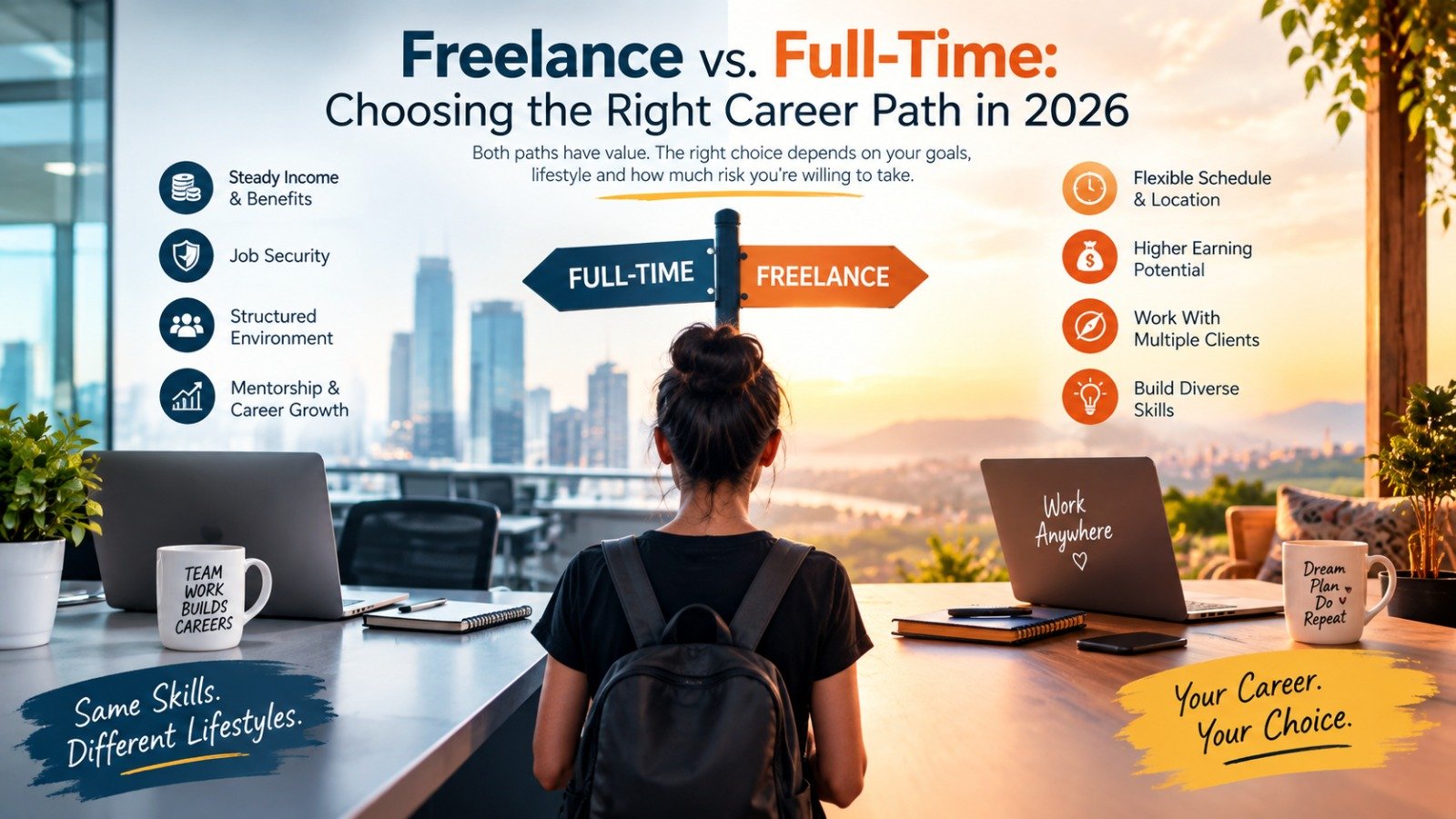
Freelance vs. Full-Time: Choosing the Right Career Path in 2026
More professionals than ever are weighing freelance work
against a traditional full-time job. Both paths can lead to a solid career —
but they come with very different trade-offs around income, stability, and
lifestyle. Here's how to figure out which one actually fits you.
Income: Steady vs. Uncapped
A full-time job gives you a predictable paycheck every
month, along with benefits like provident fund contributions, health insurance,
and paid leave. Freelancing removes the ceiling — skilled freelancers in
high-demand fields like design, development, or content can out-earn a salaried
peer — but income can swing month to month, especially when you're starting out
and still building a client base.
Ask yourself: Can you comfortably handle a slow month
without it affecting your rent or savings goals?
Stability vs. Flexibility
Full-time roles offer structure: fixed hours, a team around
you, and a clear reporting line. That structure can be genuinely useful early
in a career, when you're still learning how to manage your own time and
priorities.
Freelancing trades that structure for flexibility — you
choose your hours, your clients, and often your location. The catch is that
flexibility only works if you're disciplined enough to manage your own
schedule, chase invoices, and stay motivated without a manager checking in.
Skill Growth
In a full-time job, you typically go deep in one domain,
often with mentorship, training budgets, and a team to learn from. Freelancers
tend to go broad — juggling multiple clients means picking up business,
negotiation, and client-management skills alongside the core craft, sometimes
faster than a salaried employee would.
Job Security
This is where full-time work still has a clear edge. Layoffs
happen, but a salaried role generally comes with notice periods, severance
norms, and unemployment protections that freelance work doesn't offer.
Freelancers carry the full weight of finding their next project themselves.
Which One Should You Choose?
|
If you value... |
Lean toward... |
|
Predictable income and benefits |
Full-time |
|
Total control over your schedule |
Freelance |
|
Structured mentorship and career growth |
Full-time |
|
Working with multiple industries/clients |
Freelance |
|
Long-term stability |
Full-time |
|
Earning potential tied to your own effort |
Freelance |
Many professionals also blend the two — holding a full-time
role while freelancing on the side to test the waters before making a full
switch. There's no universally "better" option; the right choice
depends on how much risk you're comfortable carrying in exchange for
flexibility.