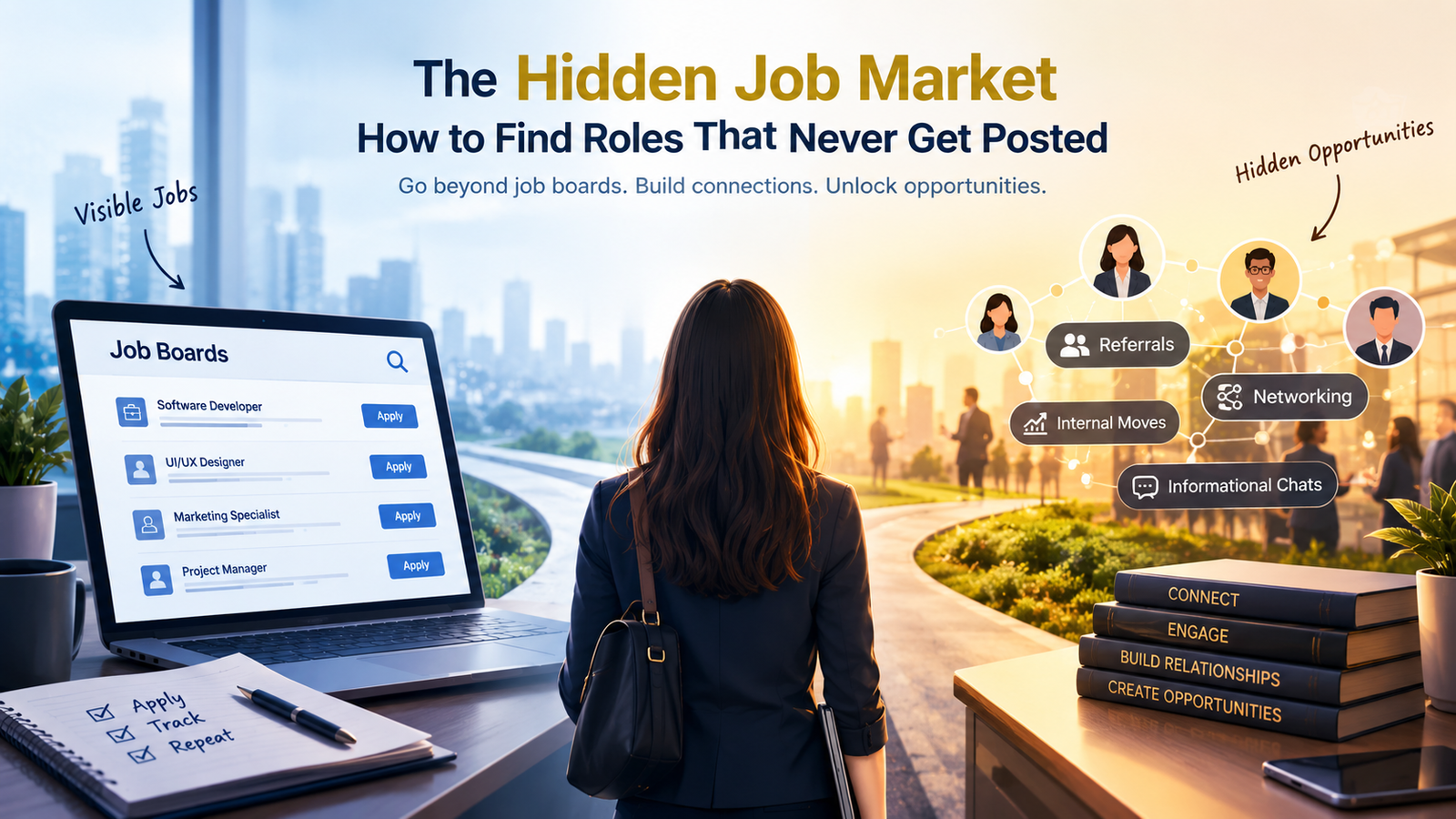
The Hidden Job Market: How to Find Roles That Never Get Posted
Career experts and staffing research have long pointed to a
striking pattern: a large share of jobs — some estimates put it as high as
70-80% — are filled through referrals, internal promotions, or direct outreach,
often before (or instead of) ever being publicly posted. If your entire job
search strategy is refreshing job boards, you could be missing the majority of
opportunities that actually exist.
What is the hidden job market, really?
- Referral-filled
roles. Many companies prioritize internal referrals because they're
cheaper to hire and tend to result in better retention. A hiring manager
would often rather interview someone their team member vouches for than
sort through 300 cold applications.
- Roles
created for the right person. Sometimes companies don't have an open
position — until they meet someone impressive. A conversation at a
conference or a strong LinkedIn interaction can lead to a role being
shaped around a candidate's skills.
- Internal
promotions and lateral moves. Positions are frequently filled by
existing employees before ever reaching the external market.
- Word-of-mouth
openings. Founders, team leads, and hiring managers often mention
upcoming openings within their professional circles weeks or months before
a formal posting goes live.
Why this matters for your search
If you're only applying to what's publicly listed, you're
competing against hundreds of other applicants for the same visible roles —
while an entire parallel hiring process happens quietly through networks you're
not part of yet.
How to tap into the hidden job market
1. Do targeted outreach, not mass outreach
Instead of connecting with dozens of strangers on LinkedIn, identify 10-15
people at companies you genuinely want to work for — ideally people in roles
similar to what you're targeting, or hiring managers on relevant teams. Send a
short, specific message explaining why you're reaching out.
2. Ask for informational interviews, not jobs
A message like "I'd love 15 minutes to learn about your experience on the
growth team" is far more likely to get a response than "Do you have
any openings?" Informational interviews build real relationships — and
often, if there's a genuine fit, opportunities naturally come up.
3. Engage before you ask
Follow companies you're interested in. Comment thoughtfully on posts from
people at those companies. Share relevant industry content yourself. When you
eventually reach out, you won't be a stranger — you'll be a familiar name.
4. Leverage your existing network first
Before cold outreach, look at who in your current network — former colleagues,
classmates, alumni groups — works at or has connections to your target
companies. A warm introduction dramatically increases response rates compared
to a cold message.
5. Attend industry events, even virtual ones
Webinars, panels, and meetups are underrated sources of hidden opportunities.
Hiring managers often mention openings casually in these settings before a job
posting exists.
6. Follow up consistently, but not aggressively
If someone doesn't respond, a polite follow-up 1-2 weeks later is reasonable.
Persistence without pressure keeps you on their radar without becoming a
nuisance.
Combining hidden and visible job searches
The most effective strategy doesn't choose one approach over
the other — it runs both in parallel:
- Use
job search platforms and alerts to catch newly posted roles quickly, so
you're applying early when a listing does go public
- Simultaneously
build and maintain relationships that put you top-of-mind for roles that
never make it to a job board
Think of it as fishing with two lines: one in the obvious
pond everyone else is fishing in, and one in waters most people never think to
check.
A simple weekly routine to work both channels
- 2-3
hours: Apply to newly posted roles matching your target criteria
- 1-2
hours: Reach out to 3-5 new contacts or follow up with existing ones
- 30
minutes: Engage authentically with target companies' content on
LinkedIn
- 30
minutes: Update your application tracker and review responses
Conclusion
Job boards will always be part of the picture — but they're
not the whole picture. Candidates who consistently land strong roles tend to be
the ones working the hidden market just as deliberately as the visible one.
Relationships take longer to build than clicking "apply," but they
often lead to opportunities that never had to compete with a hundred other
applicants in the first place.