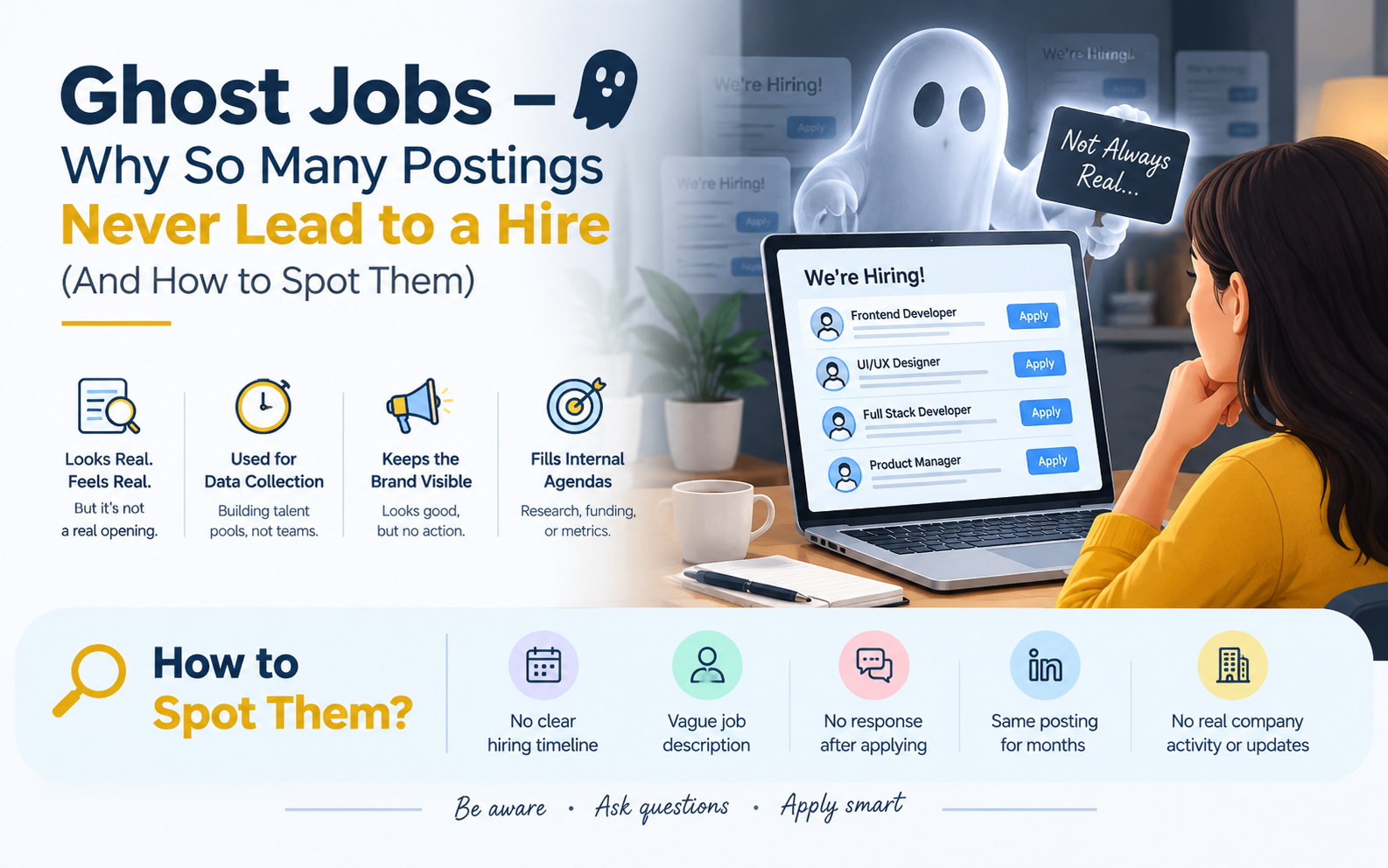
Ghost Jobs — Why So Many Postings Never Lead to a Hire (And How to Spot Them)
If you've ever applied to a job that seemed perfect, heard
nothing for weeks, and later noticed the same posting still live months later,
you may have run into a "ghost job." It's one of the most frustrating
and least understood parts of modern job hunting — and it's more common than
most job seekers realize.
What a ghost job actually is
A ghost job is a posting for a role the company isn't
actively trying to fill — at least not urgently, and sometimes not at all. That
doesn't always mean bad intent. Ghost jobs tend to fall into a few categories:
- Pipeline
building. Companies keep evergreen postings open for competitive roles
(like "Software Engineer" or "Sales Rep") so they
always have a pool of candidates ready when a real opening appears.
- Internal
politics. A role may already be earmarked for an internal candidate or
a referral, but company policy requires it to be posted publicly first.
- Budget
uncertainty. Hiring managers sometimes post a role while final
headcount approval is still pending, and the posting lingers even if the
budget falls through.
- Signaling
growth. Some companies keep open postings visible to investors,
customers, or competitors as a signal that the business is expanding —
regardless of actual hiring urgency.
- Simple
neglect. Recruiting teams are often stretched thin, and closing out
old postings falls low on the priority list. A role might genuinely be
filled or cancelled, with nobody remembering to take the listing down.
Why this matters for your search
Ghost jobs distort how job seekers perceive their own
performance. If you apply to ten postings and eight of them were never real
opportunities to begin with, it's not your resume, your qualifications, or your
interview skills that failed — the odds were stacked before you even clicked
submit. Recognizing this can be a meaningful relief, but it also means your
time is better spent learning to filter these out rather than treating every
posting as equally worth pursuing.
Signals a posting might be a ghost job
No single sign is definitive, but a combination of these is
worth noticing:
- The
posting has been live for an unusually long time — some job boards
show a "posted X days ago" indicator, and anything sitting for
60–90+ days without a status change is worth scrutinizing.
- Vague
or extremely broad requirements that could describe dozens of
different roles, suggesting the listing exists to catch a wide range of
resumes rather than fill a specific need.
- No
named hiring manager or team anywhere in the posting or the company's
careers page.
- The
same role gets reposted repeatedly every few weeks with little to no
change in wording.
- Radio
silence is the norm, not the exception, even weeks past the point
where the company's own stated hiring timeline would suggest a decision
should have been made.
- The
company has a pattern of large layoffs or hiring freezes but is still
listing dozens of open roles — a mismatch worth noticing.
What you can actually do about it
- Check
LinkedIn for recent hires. If you can see people who joined that exact
team or role recently, the posting may just be a backfill pipeline rather
than a live need — worth deprioritizing but not necessarily ignoring
entirely.
- Look
for a real person to contact. If you can find the hiring manager or a
recruiter on LinkedIn, a short, genuine message asking about the role's
status can get you a real answer faster than waiting on an ATS.
- Weight
your time by freshness. Roles posted in the last one to two weeks are
statistically more likely to be actively worked, so prioritize applying
there quickly over older listings.
- Don't
take silence personally. A lack of response is at least as likely to
reflect an inactive posting, an overwhelmed recruiting team, or internal
changes as it is to reflect anything about your application.
- Diversify
beyond job boards. Because ghost jobs are concentrated on public job
boards (where they cost little to maintain), sourcing opportunities
through referrals, direct outreach, or company events tends to surface
genuinely live openings more reliably.
The bigger picture
None of this means job boards are useless — most real hiring
still happens through them. But treating every posting as equally likely to
result in a hire leads to wasted effort and unnecessary self-doubt. A more
resilient strategy is to apply quickly to fresh postings, track how long you're
waiting on each one, and put a meaningful share of your energy into direct
outreach and referrals — channels where "is this real?" is rarely a
question you have to ask.
Understanding ghost jobs doesn't just save time — it
reframes a string of unanswered applications from "something is wrong with
me" to "some of these were never winnable to begin with," which
is a far more accurate, and far less discouraging, way to see the search.