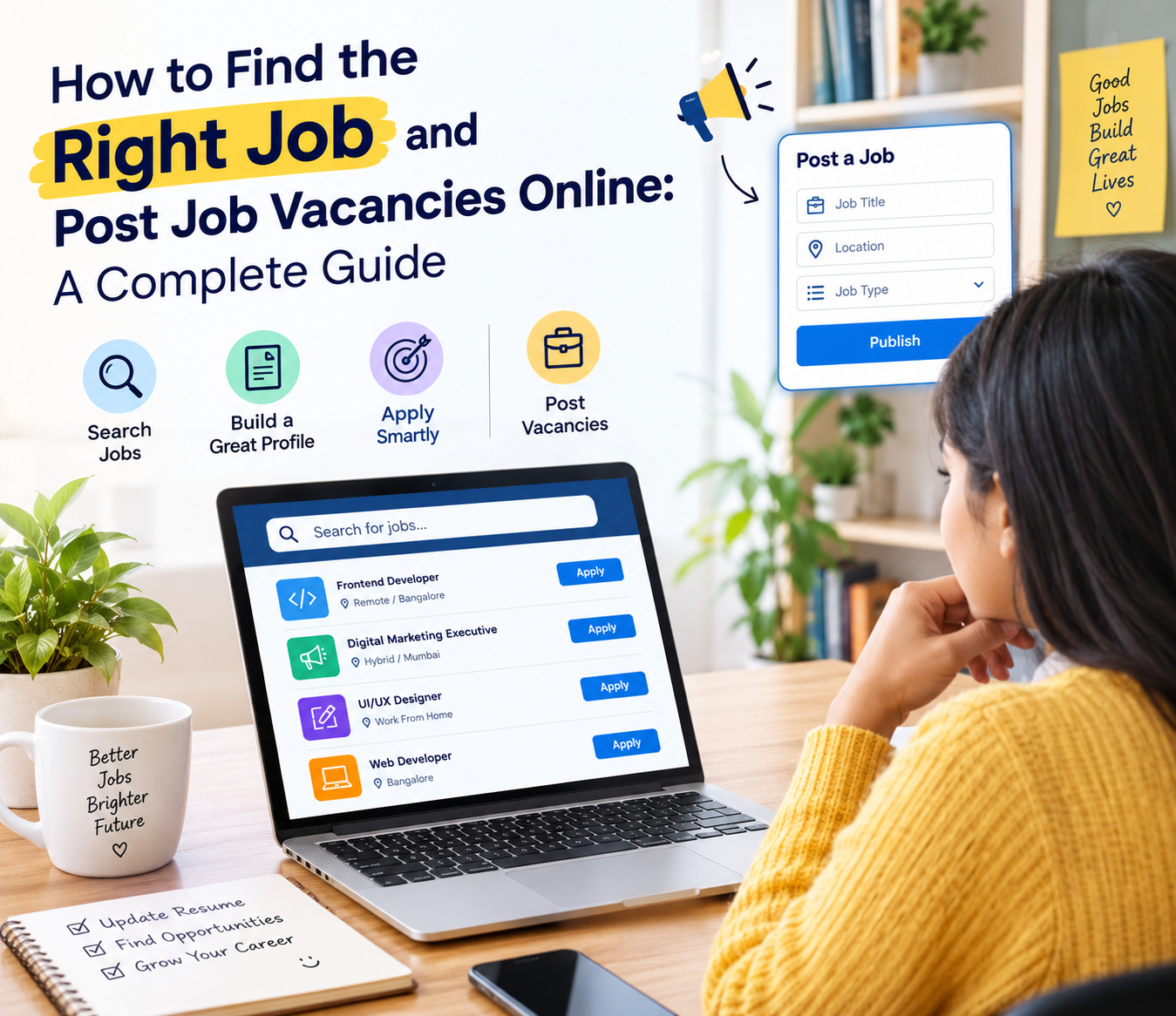
How to Find the Right Job and Post Job Vacancies Online
Finding the right job or hiring the
right candidate can be challenging in today's competitive job market. Online
job portals make the process easier by connecting job seekers with employers
across different industries. Whether you are searching for your first job or
recruiting skilled professionals for your company, understanding how online job
platforms work can help you achieve better results.
1. How to Find the Right Job Online
Job seekers can use online job portals
to explore vacancies based on their qualifications, skills, experience,
preferred location, and career goals.
Start by identifying the type of role
you want and searching with relevant job titles. Use location filters and
experience levels to narrow down the results. Review job descriptions carefully
to ensure that the responsibilities and requirements match your profile.
2. Create a Professional Resume
A well-organised resume helps
employers understand your qualifications and experience.
Include your educational background,
relevant skills, work experience, certifications, and contact information.
Freshers can highlight internships, academic projects, and practical skills.
Customise your resume for each
position by highlighting experience and abilities relevant to the job
description.
3. How Employers Can Post Job Vacancies Online
Employers can use job portals to reach
candidates who are actively searching for employment.
When creating a job post, include:
●
Job title: Use a clear and
specific designation.
●
Job description: Explain the
main responsibilities and expectations.
●
Required qualifications:
Mention the essential education, skills, and experience.
●
Job location: Specify the
workplace location and whether remote or hybrid work is available.
●
Salary and benefits: Provide a
salary range and relevant benefits when possible.
●
Application process: Explain
how candidates should apply.
A detailed job advertisement helps
attract applicants whose qualifications better match the position.
4. Tips for Getting More Relevant Applications
Employers should avoid vague job
titles and unclear descriptions. Clearly explain the role, essential skills,
experience requirements, and selection process.
Job seekers should keep their profiles
updated, apply for relevant vacancies, and prepare for interviews by
researching the employer and practising common interview questions.
Both parties benefit when expectations
are communicated clearly from the beginning.
5. Avoid Common Job Search and Recruitment Mistakes
Job seekers should be cautious of
suspicious job offers, requests for upfront recruitment fees, and employers who
cannot provide verifiable company details.
Recruiters should verify candidate
information appropriately, communicate professionally, and provide accurate
details about the vacancy.
Always use legitimate platforms and
protect personal information throughout the recruitment process.
6. Use Online Job Portals to Connect Employers and Job
Seekers
Online recruitment platforms help
bring job vacancies and potential candidates together in one place. They can
simplify job discovery, application management, and recruitment outreach.
For job seekers, these platforms
provide access to opportunities across different sectors. For employers, they
offer a convenient way to advertise vacancies and connect with prospective
employees.
Conclusion
Successful recruitment starts with
clear communication and the right approach. Job seekers can improve their
chances by maintaining a strong resume and applying for suitable roles, while
employers can attract relevant candidates through detailed and accurate job
advertisements.
Whether you are looking for your next
career opportunity or planning to recruit new employees, an online job portal
can help make the process more convenient.