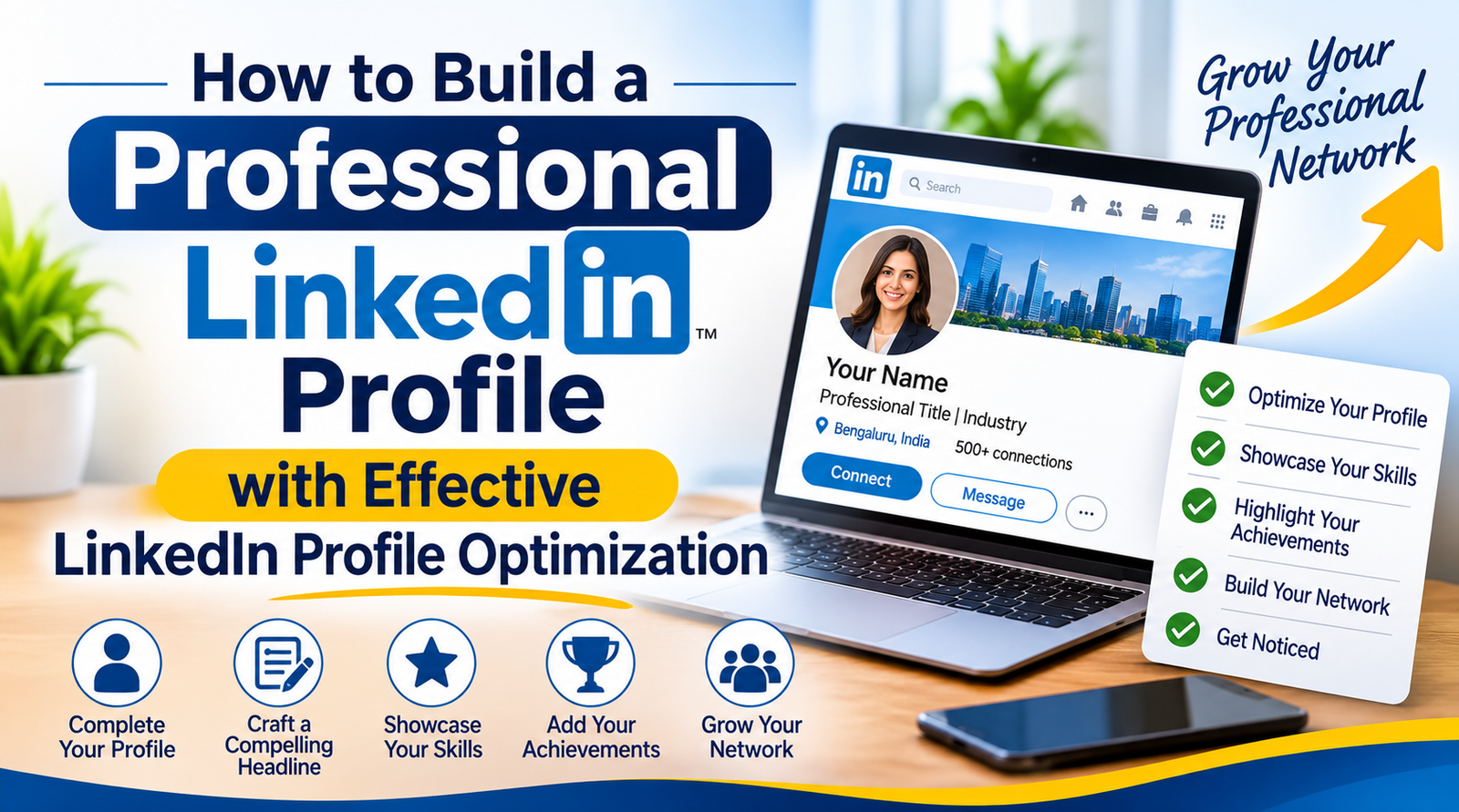
How to Build a Professional LinkedIn Profile with Effective LinkedIn Profile Optimization
In today's competitive job market,
having a professional online presence is important for building a successful
career. Recruiters and hiring managers frequently use professional networking
platforms to discover candidates, understand their experience, and identify
people who match their hiring requirements. One of the most effective ways to
improve your professional presence is through LinkedIn.
However, simply creating an account
and adding your work experience is not enough. Your profile should clearly
communicate your professional strengths, skills, achievements, and career
goals. This is where LinkedIn Profile Optimization becomes important.
A well-maintained profile can help you
present your qualifications, connect with industry professionals, and discover
career opportunities. Whether you are a fresher, an experienced professional, a
freelancer, or someone planning a career change, improving your LinkedIn
profile can make a difference.
In this guide, we will explain how
LinkedIn Profile Optimization works, which profile sections you should improve,
and how to make your professional profile more attractive to recruiters.
What Is LinkedIn Profile Optimization and Why Does It Matter?
LinkedIn Profile Optimization is the
process of improving your LinkedIn profile so that it accurately represents
your professional background and makes it easier for recruiters and other
professionals to understand your qualifications.
It involves improving different
profile sections, including:
●
Profile photograph
●
Professional headline
●
About section
●
Work experience
●
Education
●
Skills and endorsements
●
Certifications
●
Projects
●
Recommendations
●
Featured content
Effective LinkedIn Profile
Optimization is not about adding as many keywords as possible. It is about
presenting your professional information clearly while including relevant terms
that recruiters may use when searching for candidates.
For example, a digital marketing
professional could include relevant skills such as SEO, content marketing,
social media marketing, Google Ads, and keyword research when these accurately
reflect their experience.
Why LinkedIn Profile Optimization Is Important for Job
Seekers
Your LinkedIn profile often acts as an
online professional introduction. Recruiters may review it after receiving your
application or while searching for candidates with specific qualifications.
Here are some important benefits of
LinkedIn Profile Optimization.
1. Improve Your Professional Visibility
Recruiters often search for candidates
using job titles, skills, industries, and experience levels. Including relevant
information in your profile can make it easier for them to understand whether
your background matches their requirements.
Proper LinkedIn Profile Optimization
helps you present your professional information in a structured way.
2. Create a Strong First Impression
Your profile photograph, headline, and
About section are some of the first things visitors notice. A complete and
professional profile can create a positive impression.
A profile with outdated information,
an unclear headline, or an empty About section may not communicate your
potential effectively.
3. Build Professional Connections
LinkedIn allows you to connect with
recruiters, colleagues, industry professionals, business owners, and people
working in your preferred field.
An optimized profile gives new
connections a better understanding of your professional interests.
4. Support Career Development
Even if you are not actively searching
for a job, maintaining your profile can help you stay connected with industry
developments, professional communities, and potential opportunities.
Consistent LinkedIn Profile
Optimization helps keep your professional presence updated as your career
develops.
10 Effective LinkedIn Profile Optimization Tips to Attract
Recruiters
Improving your profile does not
require complicated techniques. Start by reviewing each section and making sure
your information is accurate, relevant, and easy to understand.
1. Start LinkedIn Profile Optimization with a Professional
Photograph
Your profile photograph is one of the
first visual elements people notice.
Choose a clear, recent photograph with
good lighting and a simple background. Your face should be visible, and your
appearance should be appropriate for the professional environment you want to
work in.
Avoid using:
●
Group photographs
●
Heavily edited pictures
●
Blurry images
●
Distracting backgrounds
●
Unprofessional photographs
A suitable photograph supports
effective LinkedIn Profile Optimization by making your profile look complete
and approachable.
2. Improve Your Headline Through LinkedIn Profile
Optimization
Your headline appears directly below
your name. It should explain your professional identity and the type of work
you do or want to pursue.
Avoid using only a general phrase such
as "Looking for Opportunities."
Instead, use a headline that
communicates your skills and professional direction.
Example for a fresher:
"Digital Marketing Fresher | SEO
| Social Media Marketing | Content Creation | Interested in Digital
Growth"
Example for an experienced
professional:
"SEO Executive | Technical SEO |
Keyword Research | On-Page SEO | Organic Growth"
Your headline should reflect your
actual qualifications. Adding relevant terms naturally is an important part of
LinkedIn Profile Optimization.
3. Write an Engaging About Section for LinkedIn
Profile Optimization
The About section gives you an
opportunity to introduce yourself in your own words.
Explain your professional background,
key skills, interests, and career goals. Keep the information relevant to the
type of opportunities you want.
A useful About section can include:
●
Your current professional role
or career stage
●
Your area of expertise
●
Your strongest skills
●
Relevant projects or
achievements
●
Your professional interests
●
Your career objectives
Example:
"I am an enthusiastic digital
marketing professional interested in SEO, content marketing, and social media
management. I enjoy learning how businesses improve their online visibility
through effective digital strategies. I am continuously developing my skills in
keyword research, website optimization, content creation, and digital marketing
tools."
A well-written About section
strengthens LinkedIn Profile Optimization because it helps recruiters
understand your professional background beyond your job title.
4. Highlight Work Experience with LinkedIn
Profile Optimization
Your experience section should explain
what you have done in previous roles, internships, or professional projects.
Instead of simply mentioning a job
title, describe your responsibilities and contributions.
For example:
SEO Intern
●
Conducted keyword research for
website pages and blogs.
●
Assisted with on-page SEO
activities.
●
Worked on backlink research and
off-page SEO.
●
Helped prepare SEO content and
monthly reports.
●
Reviewed website titles, meta
descriptions, and headings.
Use clear descriptions and avoid
adding responsibilities you have not performed.
For freshers, internships,
volunteering, freelance assignments, and relevant academic projects can help
demonstrate practical experience.
Accurate experience details make
LinkedIn Profile Optimization more valuable to recruiters.
5. Choose Relevant Skills for LinkedIn Profile
Optimization
The Skills section helps communicate
your professional abilities.
Choose skills that are relevant to
your industry and career goals.
For example, a digital marketing
candidate may include:
●
Search Engine Optimization
●
Keyword Research
●
Content Marketing
●
Social Media Marketing
●
Google Analytics
●
Google Ads
●
Technical SEO
●
On-Page SEO
●
Link Building
●
Website Analysis
A software developer may include
programming languages, development frameworks, databases, and technical tools.
Only include skills you genuinely
understand or have experience with. Relevant skills are an important element of
LinkedIn Profile Optimization.
6. Showcase Certifications and Projects Through
LinkedIn Profile Optimization
Certifications can help demonstrate
that you have completed relevant training or developed knowledge in a
particular subject.
Add certifications that are connected
to your career goals.
Examples include:
●
Google Analytics training
●
Google Ads certifications
●
SEO courses
●
Digital marketing
certifications
●
Project management training
●
Technical courses
●
Industry-specific professional
programmes
Where possible, include the issuing
organization, completion date, and credential details.
You should also showcase relevant
projects. These could include academic projects, internship assignments,
portfolio websites, research projects, design samples, writing samples, or
marketing campaigns.
Explain the purpose of each project
and your contribution.
Showing practical work makes LinkedIn
Profile Optimization more effective because it provides evidence of your
abilities.
7. Customize Your LinkedIn Profile URL
LinkedIn provides a public profile URL
that you can customize.
A clean URL containing your name looks
more professional when shared on resumes, applications, email signatures, and
portfolios.
For example:
linkedin.com/in/yourname
Choose a simple URL that is easy to
remember. Avoid unnecessary numbers or complicated combinations where possible.
This small improvement supports a more
professional approach to LinkedIn Profile Optimization.
8. Request Genuine Recommendations
Recommendations are written statements
from people who have worked with you or know your professional abilities.
You can request recommendations from:
●
Former managers
●
Team leaders
●
Internship supervisors
●
Colleagues
●
Project mentors
●
Academic mentors
A useful recommendation should
describe your actual work, professional strengths, reliability, or contribution
to a project.
Do not request recommendations from
people who cannot genuinely speak about your work.
Authentic recommendations can improve
the credibility of your profile.
9. Keep Your Profile Updated with LinkedIn
Profile Optimization
Your LinkedIn profile should reflect
your current professional situation.
Update it whenever you:
●
Complete a certification
●
Start a new role
●
Finish an internship
●
Learn a new skill
●
Complete a professional project
●
Receive an award
●
Change your career direction
Regular updates are an essential part
of long-term LinkedIn Profile Optimization.
10. Use the Featured Section Effectively
The Featured section allows you to
highlight selected professional content on your profile.
You can use it to display:
●
Portfolio links
●
Published articles
●
Professional presentations
●
Project examples
●
Certificates
●
Relevant videos
●
Work samples
Choose items that demonstrate your
abilities and are suitable for potential employers.
A carefully selected Featured section
makes your LinkedIn Profile Optimization more useful by giving visitors
examples of your work.
Common LinkedIn Profile Optimization Mistakes to Avoid
Even candidates with good
qualifications sometimes make mistakes that weaken their professional profiles.
Using an Unclear Headline
A headline such as "Student"
or "Job Seeker" does not explain your professional interests.
Use a headline that communicates your
skills, education, or career direction.
Leaving Important Sections Empty
An incomplete profile may not provide
enough information for recruiters to evaluate your background.
Complete the sections that are
relevant to your experience.
Adding Too Many Unrelated Skills
Listing every skill you have heard
about can make your profile confusing.
Focus on abilities that are relevant
to your target industry.
Copying Someone Else's Profile
Your profile should represent your own
qualifications and achievements. Avoid copying another person's About section
or experience descriptions.
Using Incorrect Information
Never add false qualifications,
employment history, certifications, or achievements.
Trust and accuracy are more valuable
than an impressive-looking profile.