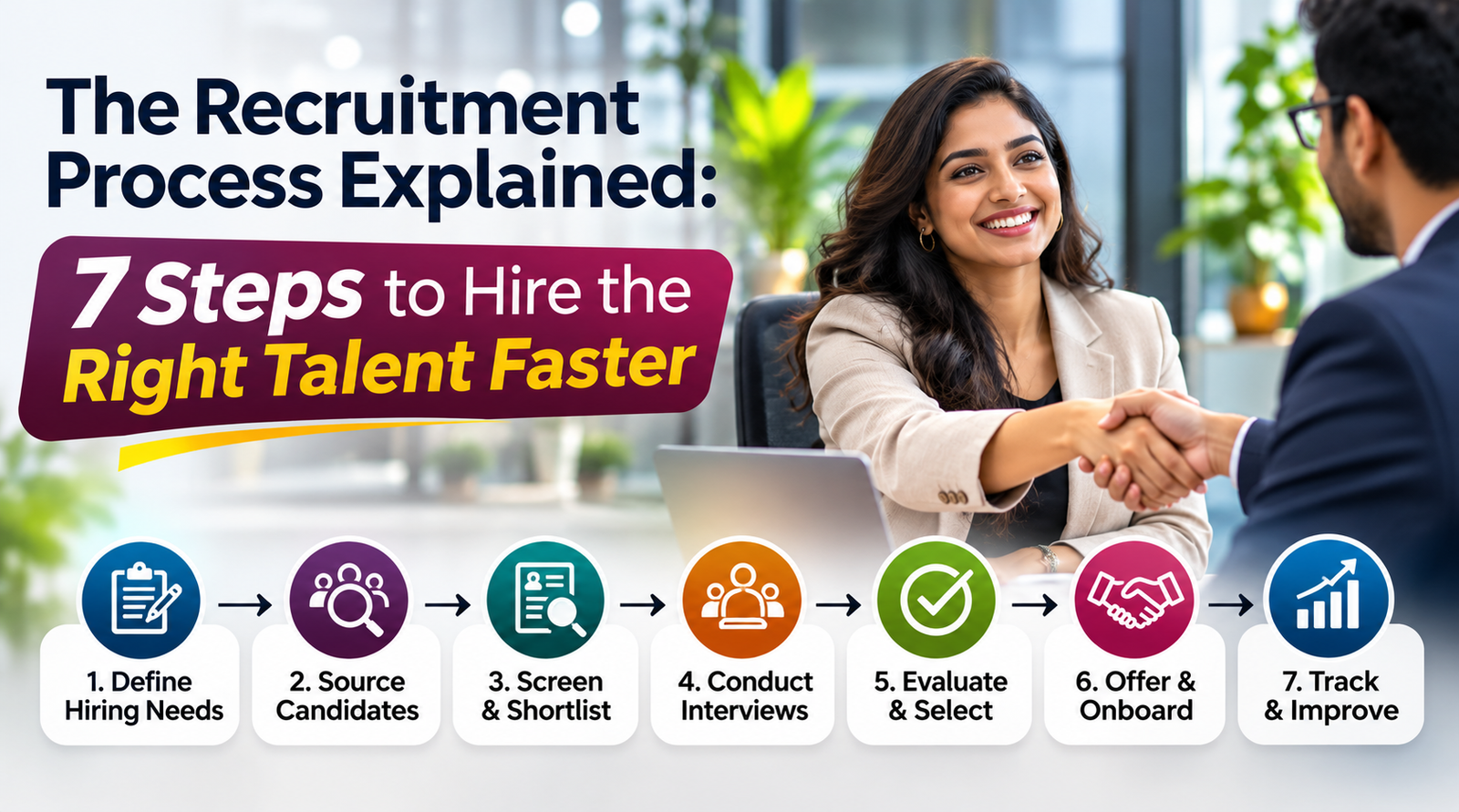
The Recruitment Process Explained: 7 Steps to Hire the Right Talent Faster
A bad hire costs time, money and team morale. A slow hiring
process costs you good candidates, who often accept another offer while you are
still deciding. A clear recruitment process fixes both problems.
This guide walks small and mid-sized businesses through
seven practical steps, from defining the role to onboarding the new employee.
What Is the Recruitment Process?
The recruitment process is the series of steps a company
follows to find, assess and hire a new employee. It starts when you identify a
hiring need and ends when the new hire joins and settles in.
Step 1: Define the Role Clearly
Before you post anything, answer these questions:
- Why
does this role exist and what problem does it solve?
- What
are the day-to-day responsibilities?
- Which
skills are essential and which are nice to have?
- What
is the salary range, work location and working model?
A clear role definition attracts the right applicants and
saves hours of screening.
Step 2: Write a Strong Job Description
Good job posts are specific and easy to scan. Include:
- A
precise job title that candidates actually search for
- A
short company introduction
- Key
responsibilities and required skills
- Salary
range, location and employment type
- A
simple way to apply
Avoid vague phrases and inflated requirements. Honest,
detailed listings get better applications.
Step 3: Post the Job Where Candidates Are Looking
Publish your opening on channels that reach your target
audience:
- Job
portals such as Jobhunterr, where you can post a job and reach active
job seekers
- Your
own website and social media pages
- Employee
referrals
- Staffing
partners for urgent or high-volume roles
If you hire often, review the Jobhunterr pricing plans
to find an option that fits your budget.
Step 4: Screen Applications Efficiently
Shortlist using a simple checklist built from your must-have
skills. Look at relevant experience, communication quality and career
stability. A short phone call of five to ten minutes can quickly confirm
interest, salary expectations and notice period.
Step 5: Conduct Structured Interviews
Ask every candidate the same core questions so you can
compare fairly. Mix three question types:
- Skill-based:
Can they do the job?
- Behavioural:
How did they handle past challenges?
- Cultural
fit: Will they work well with your team?
Use a simple scorecard to rate answers, and keep the number
of interview rounds reasonable so candidates do not lose interest.
Step 6: Check References and Make the Offer
Verify employment history and speak to one or two
references. When you decide, move fast. Share a written offer with the role,
salary, joining date and key terms, and respond quickly to any questions.
Step 7: Onboard Well
The recruitment process does not end at the offer letter.
Prepare the laptop, accounts and workspace before day one, assign a buddy and
set clear goals for the first 30 days. Strong onboarding helps new employees
contribute sooner and stay longer.
Common Recruitment Mistakes to Avoid
- Writing
vague or unrealistic job descriptions
- Taking
weeks to respond to good candidates
- Skipping
structured interview questions
- Ignoring
reference checks
- Hiring
only for skills and ignoring attitude and fit
When to Use a Recruitment or Staffing Partner
A staffing service is useful when you need to hire quickly,
fill many positions, or lack an in-house HR team. A partner can source, screen
and shortlist candidates so you focus on final interviews.
Frequently Asked Questions
How long does the recruitment process take? It varies
by role, but a well-organised process can fill many positions in a few weeks.
What is the best way to hire quickly? Write a clear
job description, post on trusted portals, screen with a checklist and keep
interview rounds short.
Is it better to use a job portal or a recruitment agency?
Portals give direct access to many candidates at a lower cost. Agencies help
with urgent, specialised or bulk hiring. Many businesses use both.
How can small businesses compete for talent? Offer a
transparent salary range, fast decisions, a friendly culture and clear growth
opportunities.
Final Thoughts
A structured recruitment process helps you hire faster,
reduce costly mistakes and build a stronger team. Start with a clear role,
communicate quickly and treat candidates with respect.