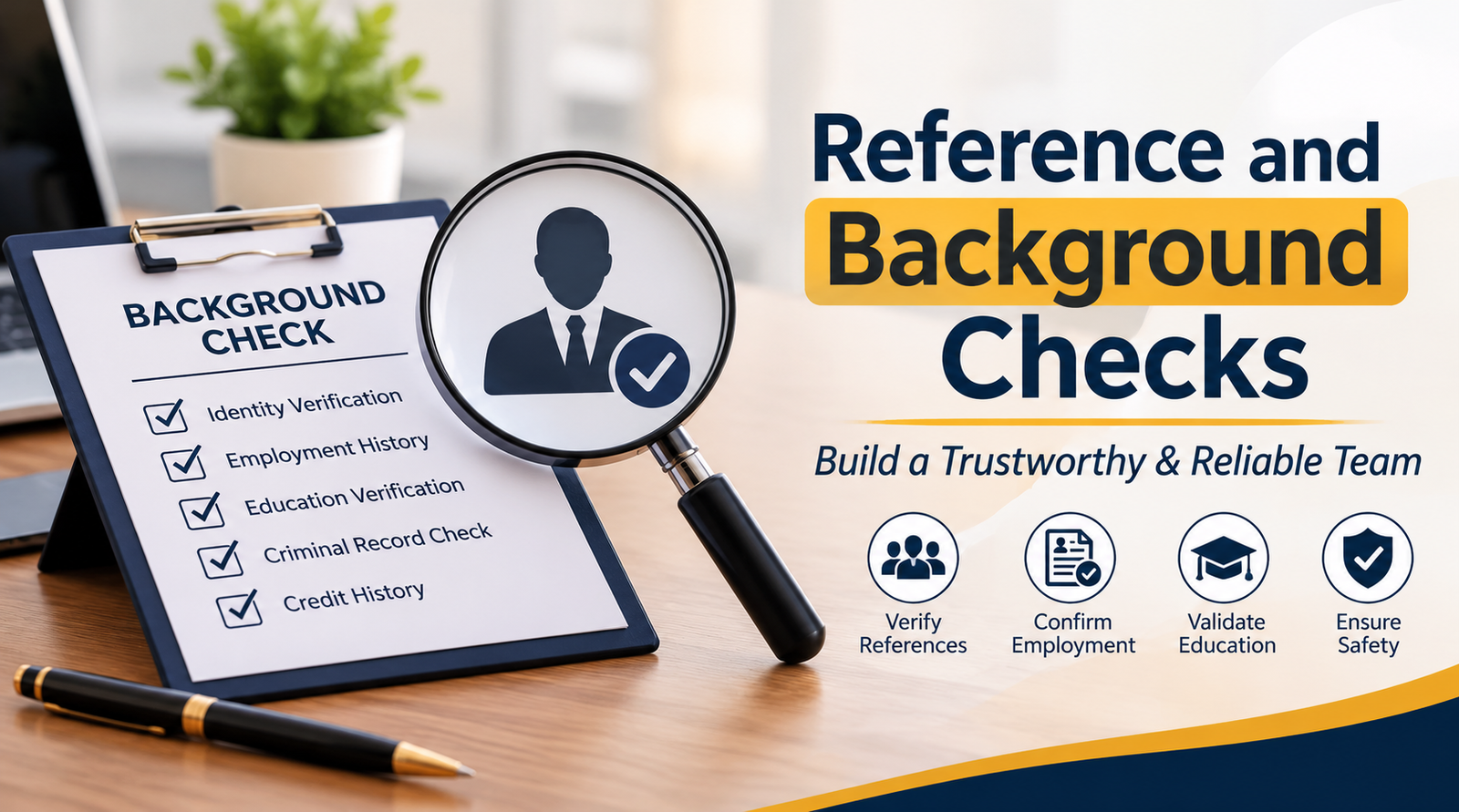
Reference and Background Checks
A hire is one of the biggest commitments a business makes.
It involves salary, training time, team morale and, in many roles, access to
money, customers or sensitive data. Verifying what a candidate tells you is the
simplest way to protect that investment.
Good verification is not about distrust. It confirms that
the person you liked in the interview matches the person on paper, and it gives
you real information about how they work. This guide explains the difference
between reference and background checks, what to verify and when, which
questions to ask, and how to stay fair and compliant while doing it.
Reference checks vs background checks
The two are often mixed up, but they answer different
questions. A background check confirms facts, while a reference check gathers
opinions and context.
|
Reference check |
Background check |
|
|
What it answers |
How did this person perform and work with others? |
Are the claims on the resume true? |
|
Who provides it |
Former managers, colleagues or clients |
Previous employers, institutions or a verification
provider |
|
Typical content |
Strengths, reliability, teamwork, reason for leaving |
Identity, education, employment dates and designations |
|
Nature of the result |
Subjective, from personal experience |
Factual and verifiable |
|
Best used for |
Judging fit and working style |
Confirming accuracy and reducing risk |
Used together, they give you a fuller picture than either
one alone.
What to verify and when
The best time to verify is after you have a clear preferred
candidate and before the offer becomes final. This keeps the process efficient
and spares you from checking people you will not hire.
- Shortlist
stage: Review the resume and LinkedIn profile for consistency in dates,
titles and responsibilities.
- After
the final interview: Ask the candidate for two or three references and for
permission to contact them.
- Conditional
offer: Make the offer subject to satisfactory verification of identity
documents, education and past employment.
- Role-specific
checks: For positions involving cash handling, confidential data or
vulnerable people, add checks that are relevant to the role and permitted
by law.
- Before
the joining date: Complete any pending checks, and confirm the outcome in
writing.
Verify only what matters to the job. A warehouse supervisor
and a finance executive do not need the same checks.
Good questions to ask a reference
Open questions get better answers than yes or no questions.
Ask every reference the same core set so you can compare fairly.
- How
do you know the candidate, and for how long did you work together?
- What
were their main responsibilities, and how well did they handle them?
- What
is one strength you would count on them for?
- Where
did they need the most support or development?
- How
did they handle pressure, deadlines or disagreements?
- How
did they work with teammates and with managers?
- Would
you work with them again, and why?
- Is
there anything else I should know to set them up for success in this role?
Listen to how the reference answers as well as what they
say. Hesitation, very short replies or careful wording can be worth a gentle
follow-up.
Red flags and how to handle them fairly
A mismatch is a reason to ask questions, not a verdict. Many
discrepancies have ordinary explanations, so give the candidate a chance to
respond before you decide.
Common red flags
- Employment
dates or job titles that differ from the resume
- A
candidate who cannot provide any reference, or only personal contacts
- References
who are vague, evasive or reluctant to confirm basic facts
- A
previous employer that cannot confirm the person worked there
- Education
details that cannot be verified with the institution
How to respond
- Share
the specific discrepancy with the candidate and ask for an explanation.
- Check
for innocent causes, such as a company that was renamed, merged or closed.
- Weigh
the seriousness: a small date difference is different from a fabricated
degree.
- Decide
using the same standard you apply to every candidate, and record your
reasoning.
Consent, privacy and fairness
Verification involves personal information, so handle it
with care. Always get the candidate's written consent before contacting
references or running checks, and tell them what will be checked and why.
- Collect
only what the role needs. Avoid asking for data that has no link to the
job.
- Apply
the same process to everyone in the same role, to avoid unfair or biased
treatment.
- Store
records securely and limit access to the people who need them.
- Keep
results confidential and do not share them beyond the hiring team.
- Know
the rules. India's Digital Personal Data Protection Act, 2023 governs how
personal data is collected and used, so confirm your obligations with your
legal or compliance adviser.
This section is general guidance, not legal advice.
Final thoughts
Reference and background checks work best when they are
simple, consistent and respectful. Verify what matters, ask thoughtful
questions, give candidates a fair chance to explain, and protect their data.
Done well, this step prevents costly hiring mistakes without slowing down your
process.