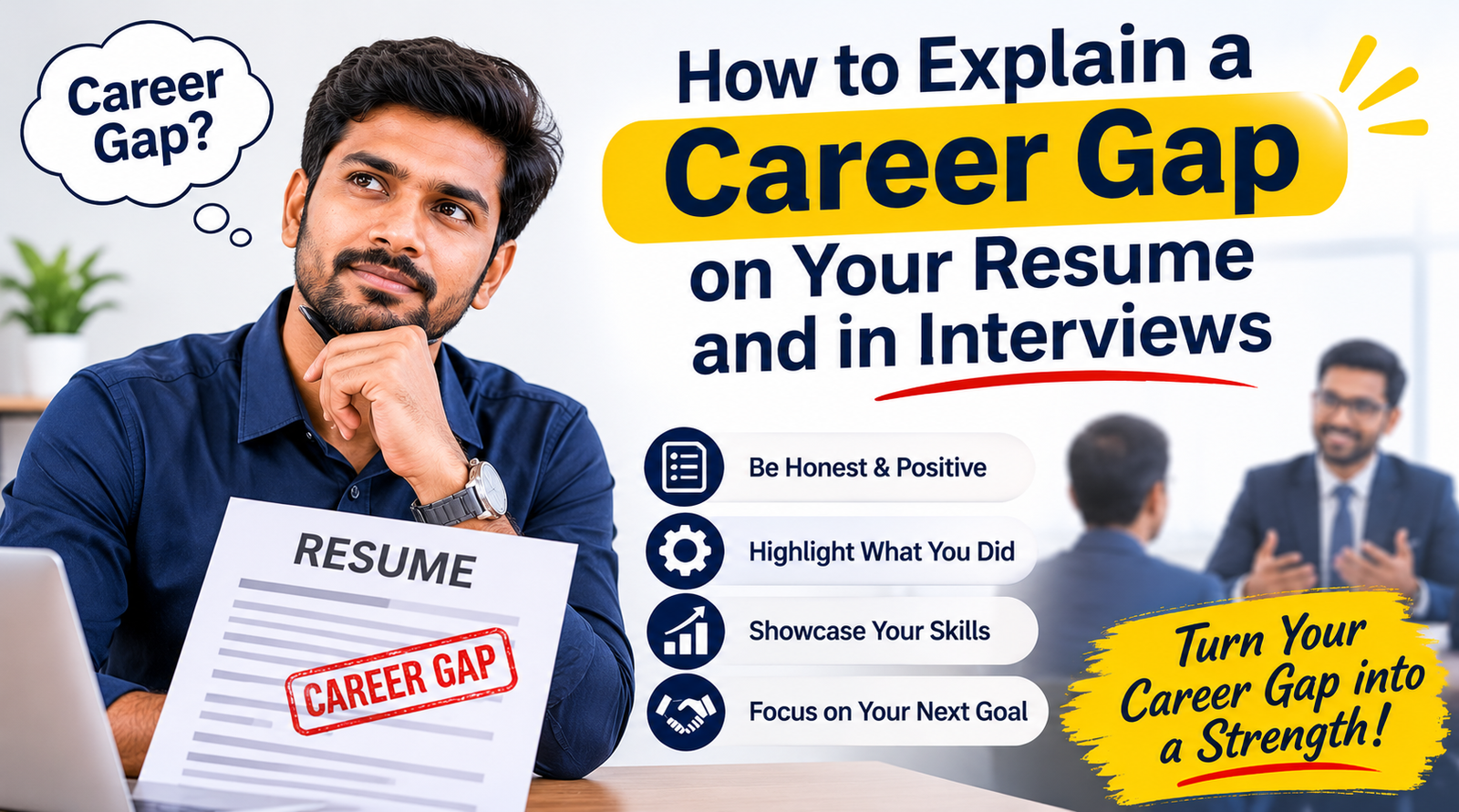
How to Explain a Career Gap on Your Resume and in Interviews
A career gap is not the end of your job search
A gap in your work history is a normal part of many careers,
and most recruiters have seen it before. People step away to study, care for
family, recover from illness, relocate, prepare for competitive exams, or
simply wait for the right role after a layoff. What matters is not that the gap
exists, but how clearly and confidently you explain it.
This guide shows how to handle a gap on your resume, what to
say in an interview, and how to use the time in ways that strengthen your
profile. It is written for job seekers across India, whether you are returning
after a few months or a few years.
How recruiters actually view gaps
Recruiters usually look for three things: a clear reason,
honesty, and proof that your skills are still current. A short gap, stated
plainly, rarely worries them. A gap that is hidden, vague, or explained
differently in the resume and the interview does.
- Length
matters less than clarity. A gap of a few months often needs no
special explanation. A longer one deserves a short, honest line.
- Recent
gaps get more attention than old ones. A break from eight years ago
carries far less weight than the last twelve months.
- Consistency
builds trust. Your resume, LinkedIn profile and interview answers
should tell the same story.
- Layoffs,
caregiving and career breaks are widely understood. Most hiring
managers have worked with someone who took time away, so a calm
explanation is usually received well.
How to show a gap on your resume
The goal is to be accurate and brief, and to point the
reader toward what you can do now. Here is a simple approach:
- Use
years for short gaps, if the dates are accurate. Writing "2023 –
2024" instead of exact months is fine when it is true. Never stretch
a job's dates to cover a gap, because background checks will expose it.
- Add
a one-line entry for longer gaps. For example: "Career Break:
Family Caregiving (Jan 2024 – Aug 2025)." A labelled break looks
organised, while an unexplained blank looks like a question mark.
- List
what you did during the break. Courses, certifications, freelance
projects, volunteering, or a personal project all count, as long as they
are real.
- Consider
a skills-first layout. A combination format puts your skills and
achievements above the dated work history, so the reader sees what you can
do before they see the timeline.
- Mention
it in your cover letter in one sentence. Address it once, then move on
to why you fit the role.
If you want a clean, ready-made structure, the Jobhunterr Resume Builder can help you lay
this out. For tips on getting a resume through automated screening, read our
guide on writing a resume that gets past
ATS.
What to say in interviews, with sample answers
A good answer has three parts: the reason, what you did
meanwhile, and why you are ready now. Keep it under a minute, say it calmly,
and steer the conversation back to the role.
- After
a layoff: "My team was restructured last year. I used the months
after that to complete a data analytics course and take on two freelance
projects. I am now looking for a stable role where I can apply those
skills."
- Family
responsibilities: "I took a planned break to care for a family
member. That situation is settled, and I kept my skills current with
online courses. I am ready to commit fully to a new role."
- Health
reasons: "I took time off to deal with a health matter that is
now fully resolved. I am ready to return and focus on my work." You
do not need to share medical details.
- Further
study or exam preparation: "I spent that time preparing for a
competitive exam. It did not work out the way I hoped, so I am returning
to the field I enjoy, with stronger discipline and a clearer goal."
- A
long job search: "I have been selective, because I want a role
where I can stay and grow. Along the way I picked up new skills, and your
opening matches them well."
Practise these aloud before the interview. For more
preparation ideas, see our guide to job interview questions and answers.
Mistakes to avoid
Most of the damage around a career gap comes from how it is
handled, not from the gap itself.
- Changing
dates to hide it. Verification checks tend to catch this, and it can
cost you an offer.
- Over-apologising
or sounding defensive. State the facts and move on.
- Criticising
a former employer. Even if the exit was difficult, keep your tone
neutral.
- Sharing
too much personal detail. A brief, honest reason is enough.
- Telling
a different story in each place. Keep your resume, LinkedIn profile
and answers consistent.
- Hoping
nobody notices. A long gap with no explanation invites guesswork, and
guesses are rarely kind.
Turning gap time into real value
If you are in a gap right now, small and steady steps help
more than one big move. Choose activities linked to the roles you want.
- Take
a short, relevant course. Pick skills your target jobs actually ask
for, rather than collecting certificates.
- Do
freelance or project work. Even one or two small assignments give you
something concrete to discuss.
- Volunteer.
Non-profit and community work can build skills and fill a timeline
honestly.
- Consider
contract or part-time roles. These keep your experience current and
can lead to full-time offers.
- Keep
networking. Speak to former colleagues and reach out to people in your
field, because many openings never reach a job board.
- Stay
cautious about paid shortcuts. Never pay anyone for a guaranteed job.
Read how to before you share money or documents.
Final thoughts
A career gap is a chapter in your story, not a flaw in your profile. Be honest about it, explain it briefly, and show what you can do today. Employers hire people for the value they bring, and a well-handled gap often shows maturity and resilience.